What Becomes Easy to See Is Not the Same as What Is There
The same evidence can lead attention in different directions depending on how it is organized. Nothing has to be hidden, removed or measured differently for representation to change what becomes easy to notice first.
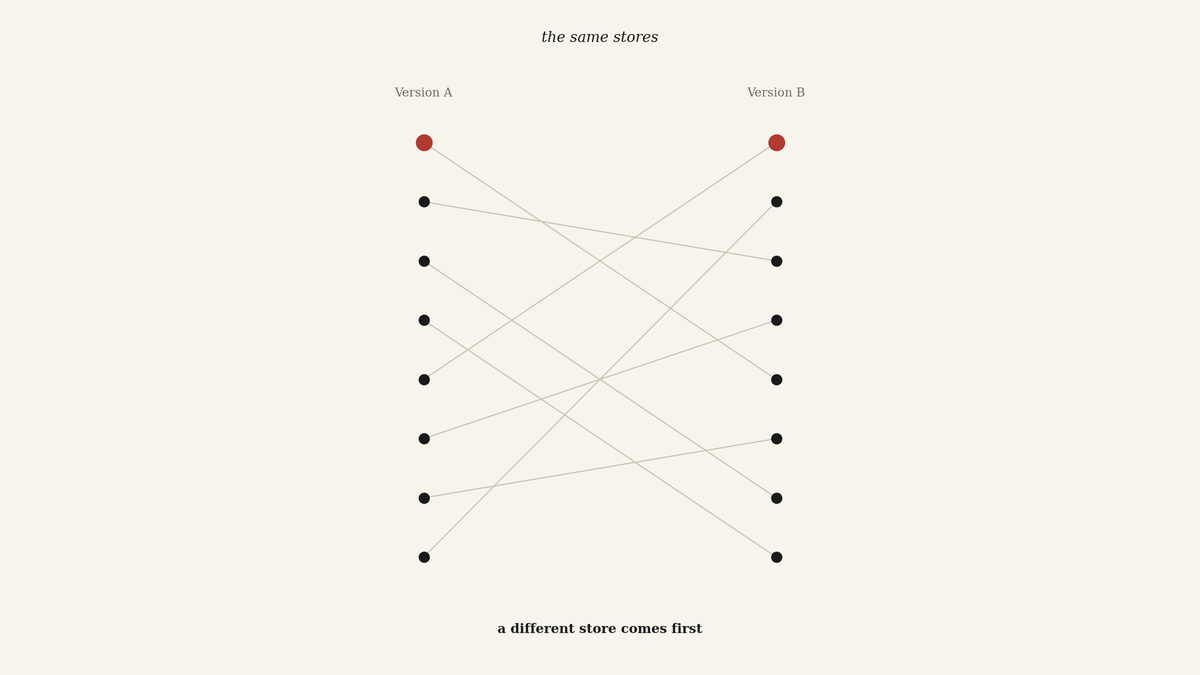
Representation can change what becomes easy to notice without changing the evidence itself.
Two versions of the same weekly category review can contain exactly the same evidence — the same 200 stores, the same metrics, the same period, the same numbers — and still put different things in front of the person reading them. Nothing was measured differently. Nothing was hidden, invented, or left out. And nobody has to make the mistake this chapter's first essay described, of treating the representation as if it were the business itself, for any of this to matter.
Framing determines what the organization is looking for. Representation shapes what becomes easiest to see while looking for it. The frame can stay fixed — same objective, same alternatives, same unit of decision, same criteria — while the representation changes.
Working proposition
The same evidence can support different patterns of attention depending on how it is organized in the representation.
Take the review itself. Version A lists the 200 stores ranked by absolute sales. Version B lists the same 200 stores ranked by decline versus baseline. No evidence was added, removed, or remeasured. Only the structure changes. But the stores that open the conversation are not the same stores, and the pattern each version makes visible first — scale in one case, deterioration in the other — is not the pattern the other version leads with. Whoever works from Version A starts the week noticing something different from whoever works from Version B, and neither of them has seen anything the other one didn't technically have access to.
This is not about which option someone is being pushed toward. There is no alternative being offered here, no choice being framed for anyone to accept or decline — the table exists before any decision does. It structures the evidence through which the situation is seen, which is a different question from how alternatives eventually get chosen.
Neither ordering is more correct than the other. One conversation may need to begin with scale. Another may need to begin with deterioration. The point is not that one arrangement is universally better than the other. Each one makes some comparisons immediate and leaves others to be found on purpose, and a review built for one conversation can sit for months inside an organization that actually needed the other.
Measurement determines what evidence exists. Representation shapes what becomes easy to see in that evidence. Interpretation determines what a person does with it — a separate question, for a separate essay.
The table did not lie. It quietly changed what became easy to see first.
This essay is part of the In-Store Retail Media Framework under Commercial Representation. New readers can begin with Start Here or explore the Principles that guide the Journal.